Ask in your own words
Explore push-to-talk on supported devices for questions, daily plans, and follow-ups. Keep a remote or keyboard alternative so voice is a choice.
 FireM3UDownload app
Our goal is to help blind and low-vision people use their AI assistant independently at home. Ask a question, hear a useful answer, and control the experience without needing to read the TV.
See the accessibility milestonesThese are proposed features. The current development APK does not yet offer this voice-first AI experience. Device support will be confirmed through testing.
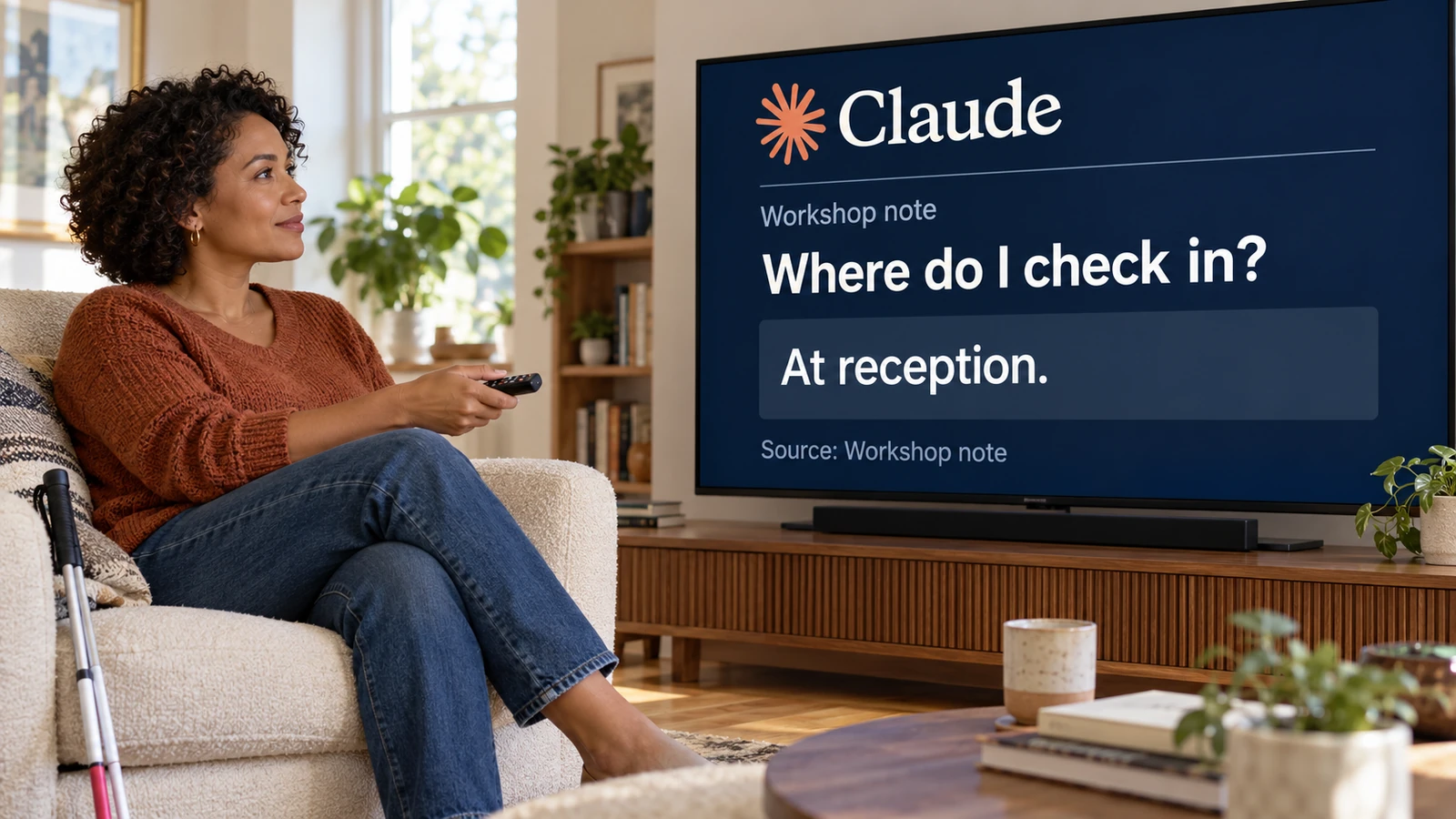
A spoken answer is only one part of the experience. Setup, navigation, and privacy need the same attention. These are the priorities we propose for FireM3U.
Explore push-to-talk on supported devices for questions, daily plans, and follow-ups. Keep a remote or keyboard alternative so voice is a choice.
Read responses aloud and explain the important values and comparisons in AI-generated charts. Add repeat, pause, and speech-speed controls.
Announce menu options, the selected control, loading states, and errors. Make remote focus predictable and test compatibility with supported device screen readers.
Design spoken setup instructions and an accessible connection flow. Avoid image-only steps or a pairing code that can only be read on the TV.
Make microphone use explicit, give spoken confirmation when listening stops, and provide a clear way to pause speech or disconnect a bot. Explore private headphone output where supported.
Keep text alongside speech. Explore larger type, strong contrast, and uncluttered layouts for people with low vision and households with different preferences.
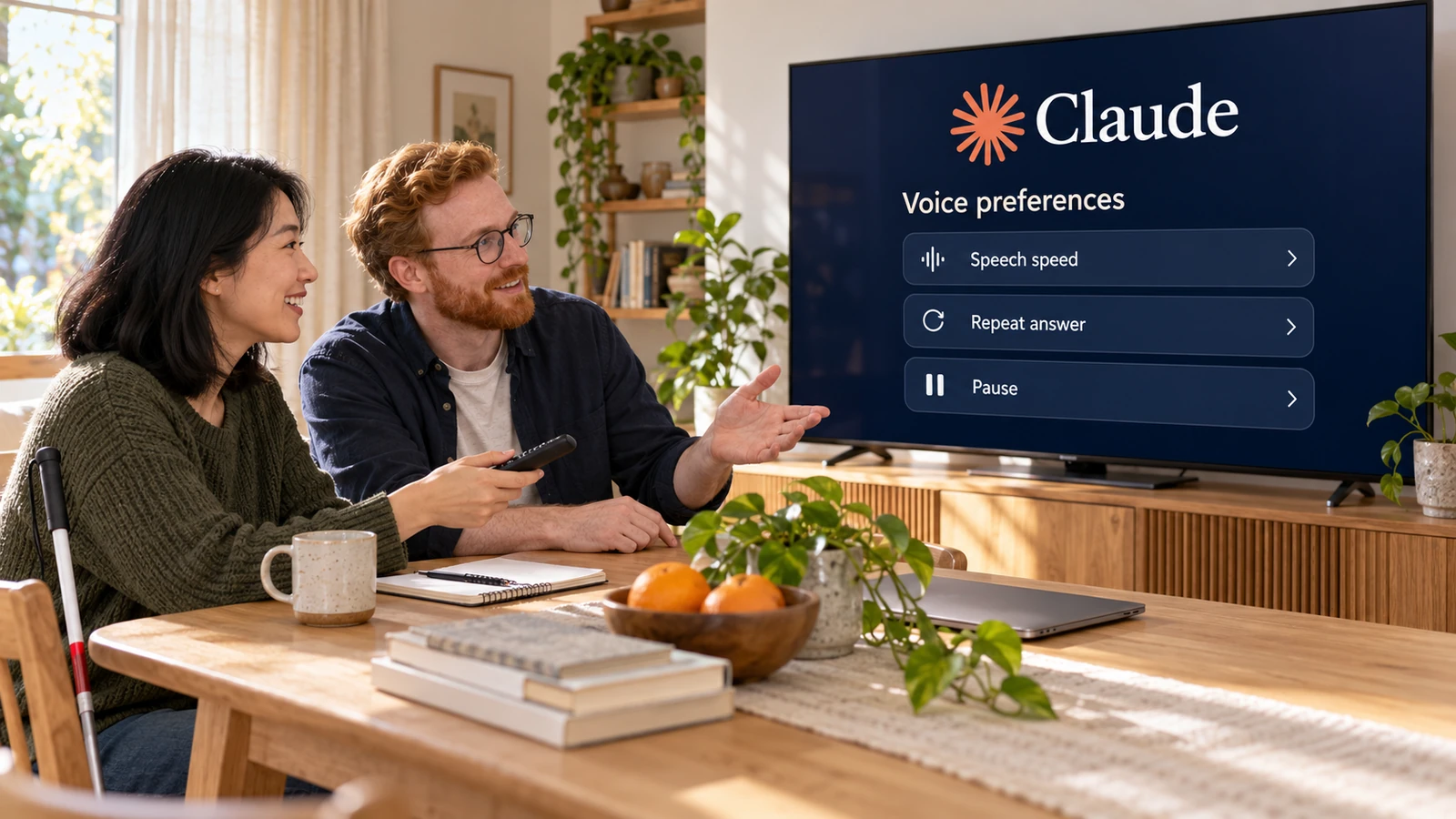
We propose a co-design pilot with blind and low-vision participants before a wider AI release. Participants would help choose useful tasks, review prototypes, and identify barriers. Recruitment and pilot details are not yet announced.
Our proposed release test is practical: can someone connect a bot, ask a question, understand the answer, recover from an error, and stop or disconnect without sighted assistance?
We would report task completion, barriers, and device limitations from that pilot before describing the experience as ready. Until then, this page sets out our intended direction.
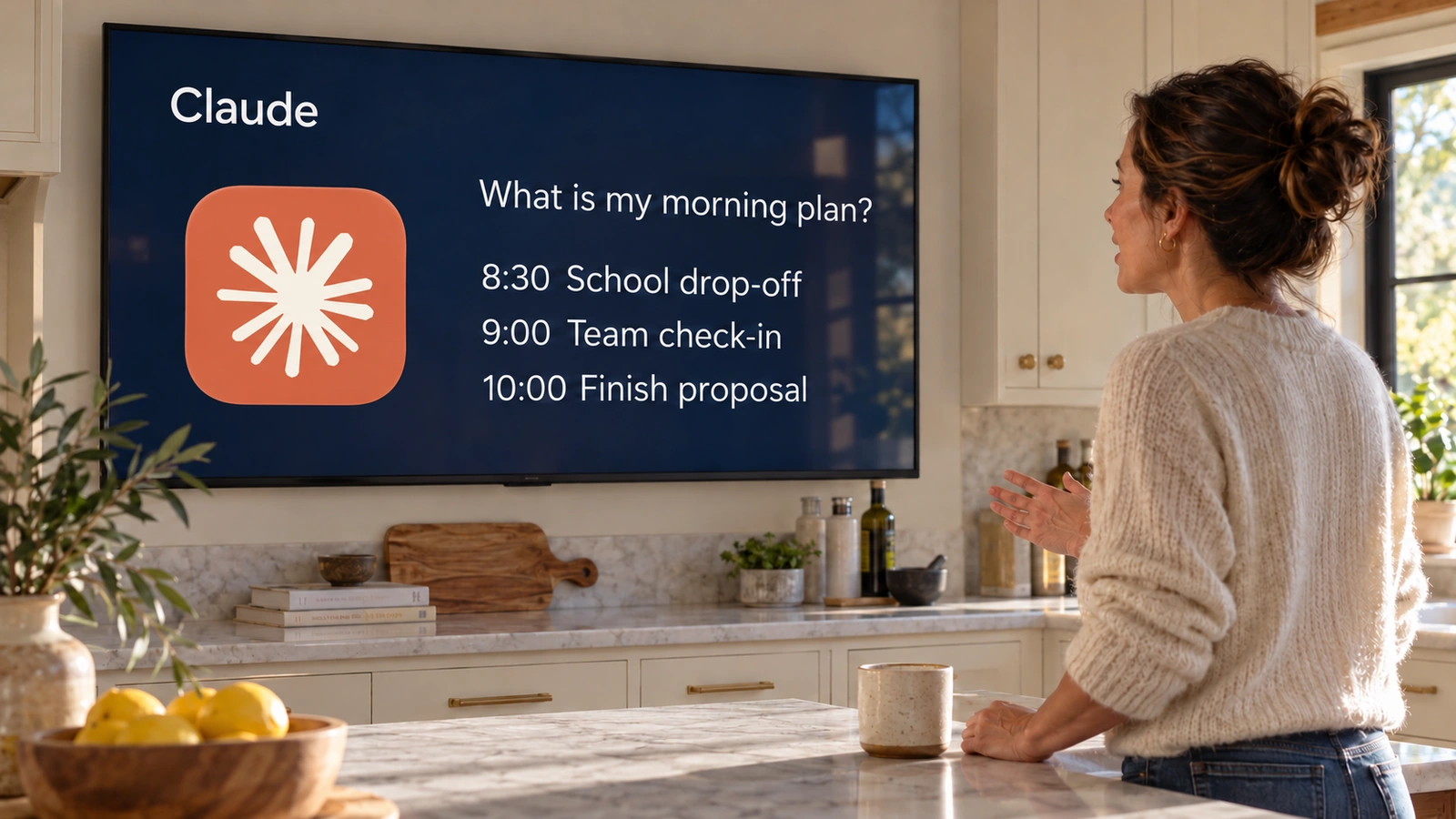
Ask your connected bot to read a plan you provide, then repeat one item or explain it in more detail.
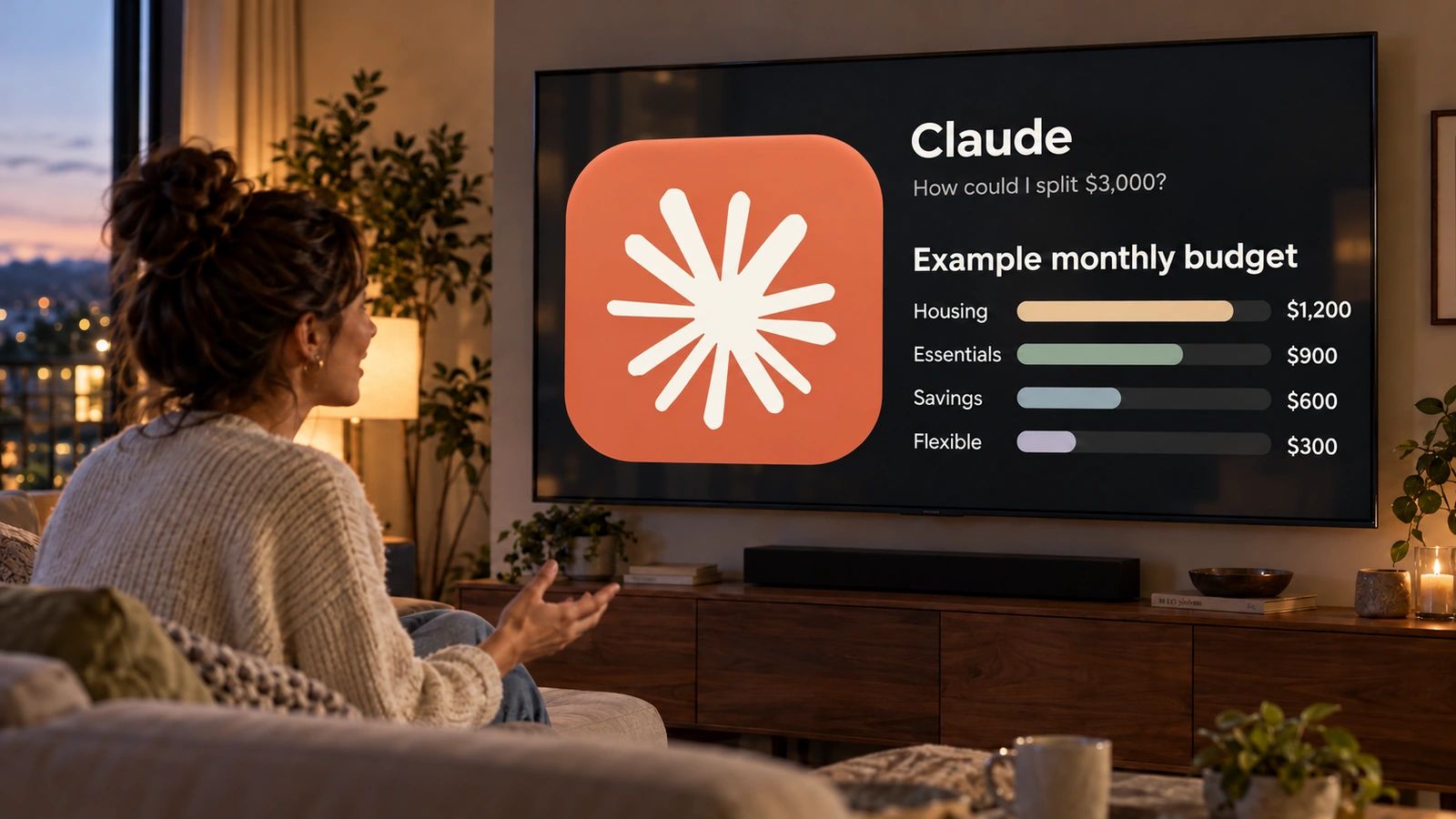
Ask for the values, comparisons, and main takeaway from a chart in an AI response, without relying on its colors or layout.
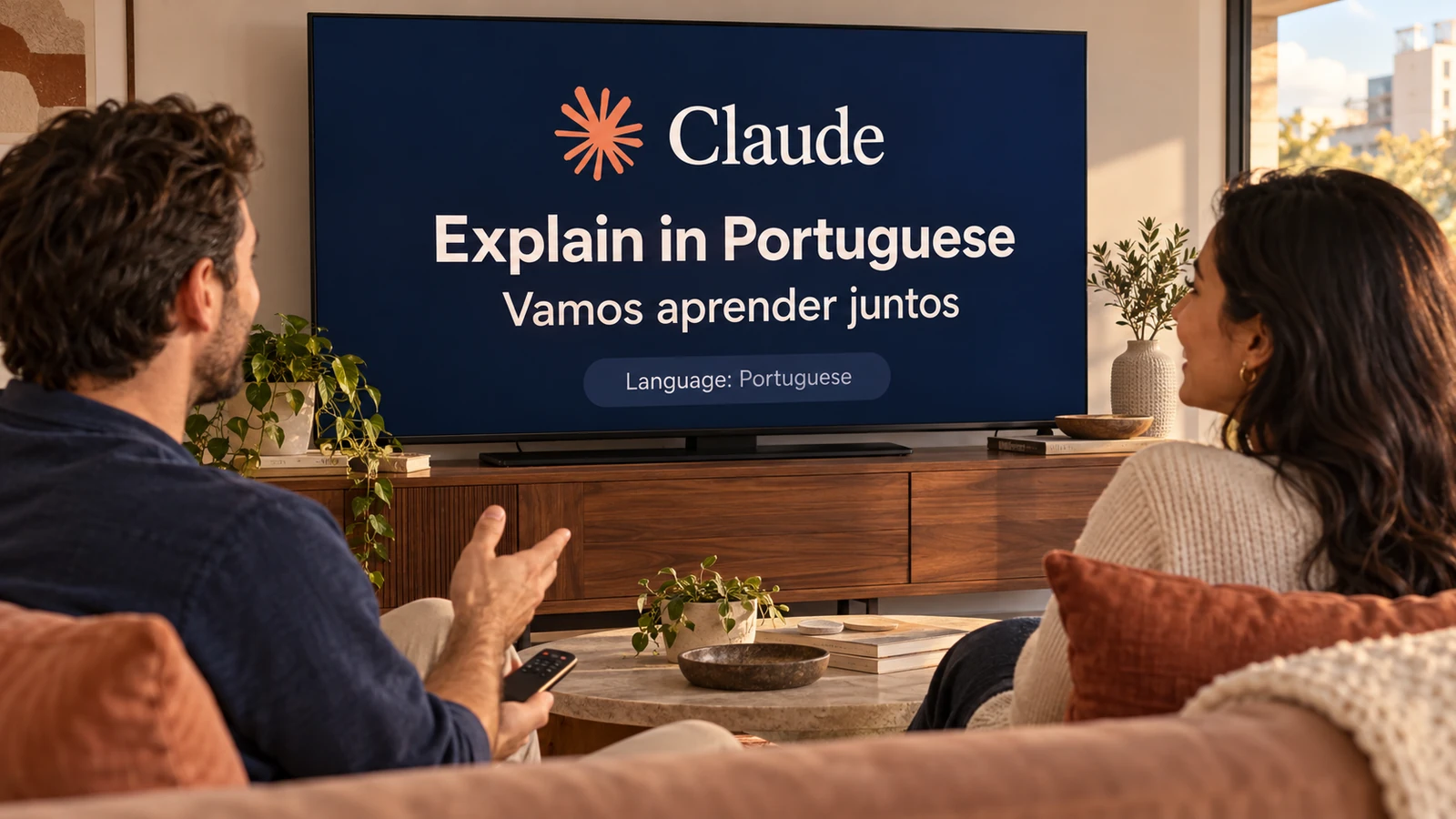
Explore an idea together, with spoken responses and optional on-screen text for others in the room.
Our proposed Claude document companion would let you ask about a text document you choose and hear the supporting passage. The pilot would measure independent use, answer support, and control over the session.
Explore the document companion and more ideasFollow the proposed steps from the current app to a voice-first AI experience.