Our first proposed Claude-based experience has a specific job: help a blind or low-vision person ask about a document, hear an answer, and hear where it came from, using a TV at home.
FireM3U has an existing development APK. The AI features on this page are proposals for implementation and testing; Claude integration and pilot results are pending.
The proposed experience keeps a source passage within reach of every document answer. A spoken source command would make it available without reading the TV.
Start with readable text documents. Scanned pages and complex visual layouts would need separate evaluation before support is announced.
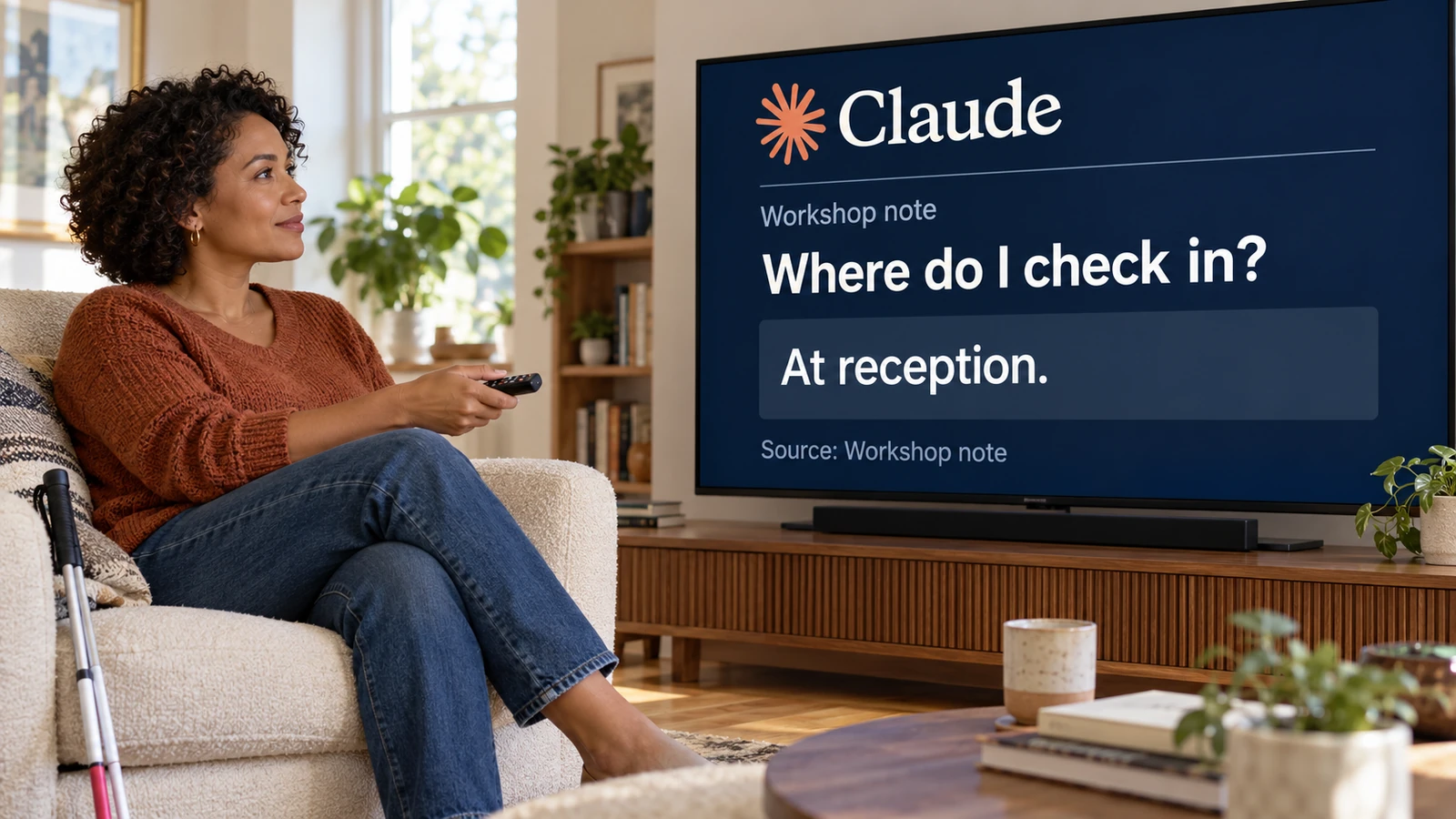
Workshop note · Fictional sample document
“Check in at reception before the workshop. Bring a notebook for the practice session.”
You ask
“Where do I check in?”
Proposed spoken answer
“At reception, before the workshop.”
Supporting passage
“Check in at reception before the workshop.”Workshop note · Sentence 1
Static example. The proposed app would retrieve and speak source passages from documents you choose.
A FOCUSED START · ROOM TO GROW
Six ideas. One clear first step.
Prioritize the document question-and-answer flow and its sources. Use pilot feedback to decide when the remaining ideas earn a place in the product.
Choose a text document or a supported PDF with readable text, then ask about it from your TV. Start with everyday information such as a class note or an appliance guide, with spoken answers and follow-up questions.
Question to test Can someone find the information they need independently?
Ask the assistant to read the passage behind an answer. Keep the source available as text too, and make a missing or unclear answer explicit. Evaluate whether each answer is supported by the supplied document.
Question to test Does the supporting passage actually answer the question?
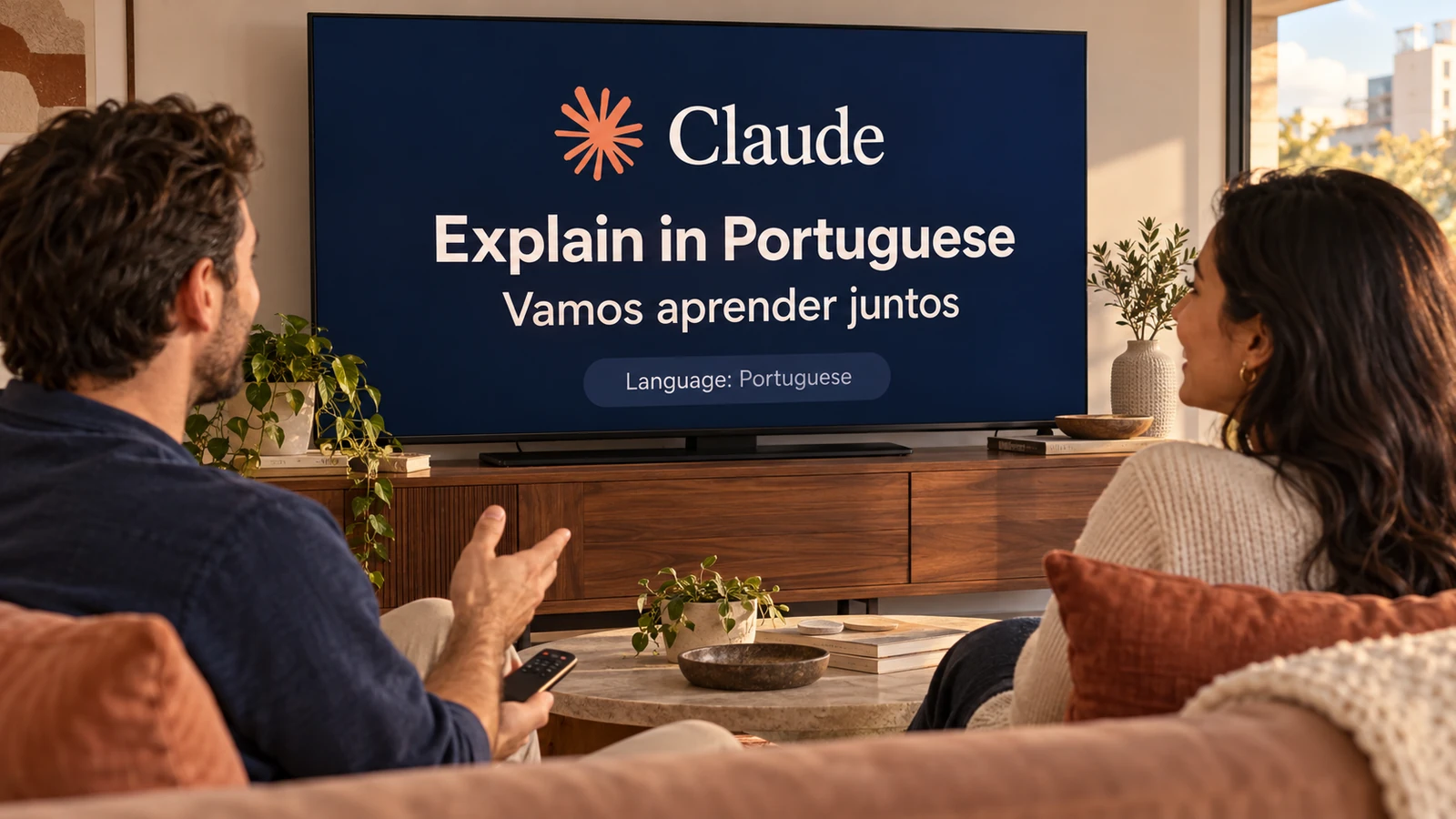
Explore English and Portuguese first, with a language choice that applies to questions, answers, and spoken controls. Review comprehension and speech quality with speakers of each language before claiming support.
Question to test Can people understand the same task in their preferred language?
Explore user-initiated sharing of one selected answer or source with someone the user chooses. Design a spoken confirmation, a clear access scope, expiration, and a way to revoke sharing.
Question to test Does the user understand and control exactly what is shared?
Explore optional profiles for speech speed, language, text size, and contrast. Make profile switching audible and let users reset preferences. Treat shared-TV access and conversation history as separate design decisions.
Question to test Can household members use their own settings without confusion?
Explore a small pilot with accessibility organizations, community learning spaces, and households. Consider organization-sponsored access alongside a household subscription, with clear usage limits and measured costs.
Question to test Which access model is useful, affordable, and sustainable?
WHY CLAUDE · PROPOSED INTEGRATION
Reasoning with sources in reach.
ClaudeAnthropic
We propose Claude as the first AI provider, using the first-party Claude API for document questions and cited answers. Anthropic documents citation support for supplied text and text-bearing PDFs. Read the Claude citation documentation.
FireM3U would provide the TV interface, accessible controls, and connection flow. Speech capture, transcription, and speech playback would be separate components selected and tested for each supported device.
Our proposed backend would keep API credentials off the TV, send only the document content and question needed for the session, and define file deletion and retention controls. These controls need implementation and verification before release.
Model output would be checked against the source in our evaluation set. A citation provides a passage to inspect; we would still measure whether the passage supports the answer.
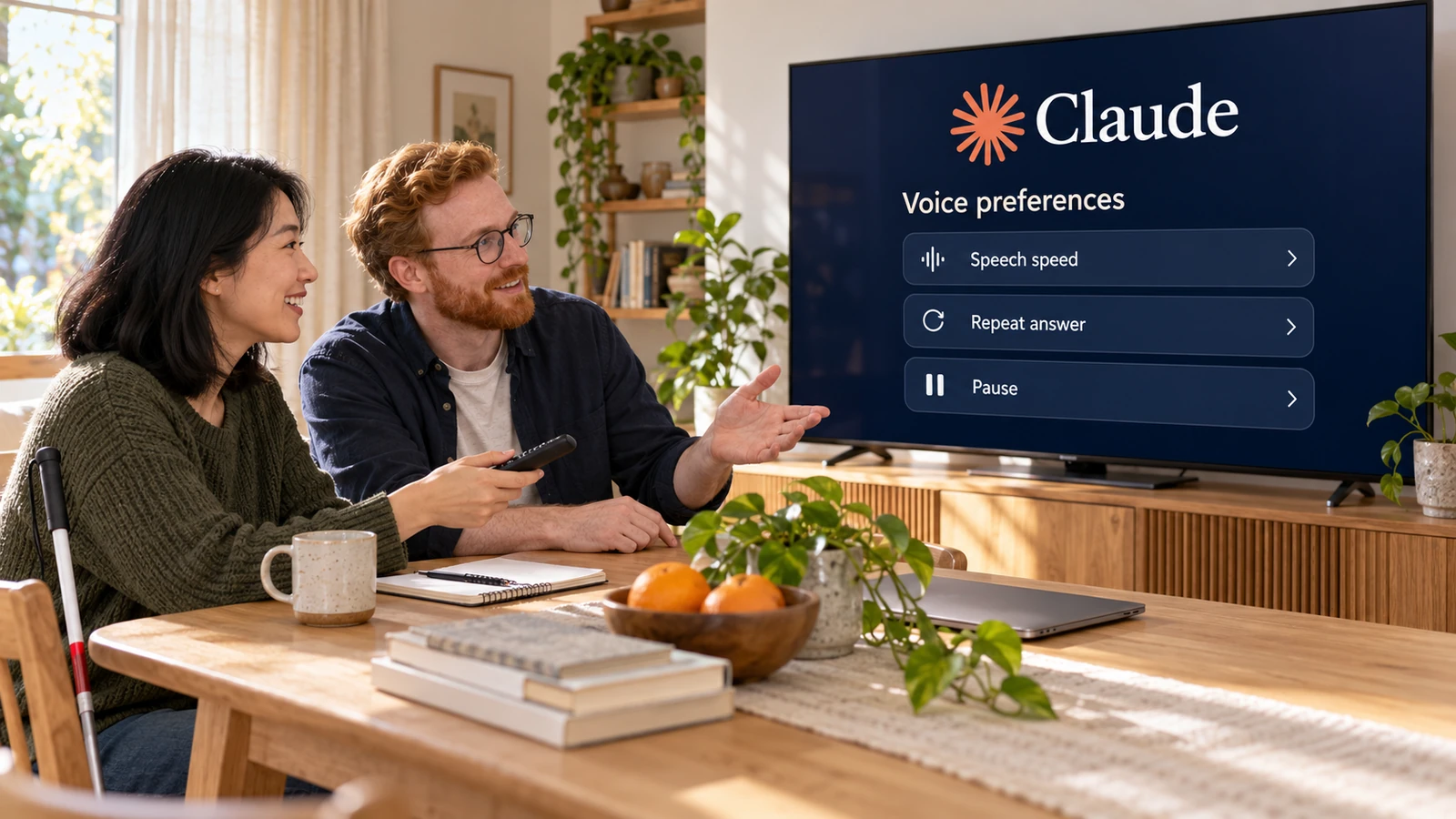
A proposed co-design conversation · Generated concept, not a pilot photographView full-size image
THE EVIDENCE WE WANT TO BUILD
Measure the experience. Publish what we learn.
Propose a co-design pilot with blind and low-vision participants, using consented tasks and device testing. Measurements, participant recruitment, and results are pending.
Independent task completion
Complete setup, find an answer, hear its source, and end the session without sighted assistance.
Answer support
Review answers against the supplied passage, including questions the document cannot answer.
Response time
Measure the time from finishing a question to the first spoken answer on each tested device.
Control and privacy
Test stopping speech, ending microphone capture, switching profiles, and any sharing controls.
Cost per successful task
Track model and speech costs alongside task success to evaluate pricing and usage limits.
Proposed release gate: resolve critical barriers to independent use and publish task results, answer-quality findings, and the tested device list before a wider AI release.
ACCESS THAT CAN LAST
A social purpose. A sustainable product.
Our initial audience is blind and low-vision adults who want independent access to everyday information through a home TV. We propose focusing on one tested device family before expanding.
Explore a household subscription with clear usage limits, and organization-sponsored access for pilot participants. Pricing and sponsorship arrangements will follow cost measurements and participant feedback.
Keep accessibility controls in the core product design. Explore outreach to sight-loss and community organizations for co-design and pilot distribution. Organization partnerships are pending.
These are commercial hypotheses to validate. Revenue, adoption, and impact figures will be shared once measured.
One useful task. A complete experience.
Follow the proposed path from a Claude document prototype to independent use at home.
 FireM3U